Just like every darkest night is followed by one bright morning, the festival of Navratri (also known as Doorga Pooja) comes as a time of full celebrations after the fortnight of Pitri Paksh (a period where ancestors are remembered and no auspicious task is undertaken). Hindus around the world are currently observing the Navratri fast for nine consecutive nights representing the nine forms of the Goddess Doorga.
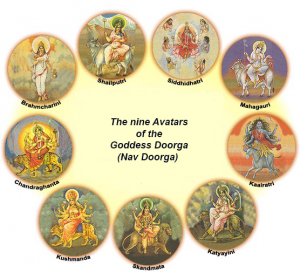
This festival is very popular among Mauritian devotees as it brings in happy tidings where clay statues of the Goddess are adorned and worshiped throughout the nine nights. Bhajans (religious songs) are sang all night through, in glory of the Holy Mother. All temples resound with chants glorifying the Goddess while devotees keep coming to see the deity and seek for her blessings. The whole atmosphere vibrates with pure holiness where one can experience the energy that emanates in concentrating and praying to the Goddess. Some fast by eating only sweet dishes during this festival while others fast by eating only fruits. It is said that during this auspicious period, prayers made with true devotion are answered and obstacles in one’s life are completely removed.
While the festival goes on, devotees also organise Doorga Poojas at their own place where relatives, neighbours as well as friends are warmly invited to attend the prayers. The ceremony usually ends in Maha Prasad being served – food which has been blessed during the prayers. These nine nights of celebrations are therefore a time to rejoice in the grace of the Goddess who stands as the Supreme Mother and therefore exhibits all the qualities of a woman as a mother, a wife, a sister and a daughter. It comes as an occasion to renew one’s devotion and faith in the Supreme and seek for those positive vibrations that prevail during this period. The Navratri is therefore not only a moment of intense devotion but also the time of the year to rejoice and celebrate. It brings about a crowd of devotees who together sing special mantras which in turn purify the atmosphere and generate positive vibrations.
The tenth day of the festival, called Dusshera or Vijaya Dashami, marks the end of the celebrations where the victory of the Goddess Doorga over demons called Shumbh, Nishumbh is remembered. At the same time, the clay statues mentioned earlier are brought to the sea or river for immersion. Devotees come in mass to assist to this last ritual. It is a special way to conclude this holy period in apotheosis where processions towards the seaside or riverside are highly vibrant with holy songs being sung all the way through or loudspeakers from vehicles blasting with holy chants in glory of the Goddess. Navratri, in Mauritius, is thus celebrated with much devotion and happiness among devotees who await this festival with much eagerness, every year.