https://www.youtube.com/watch?v=AorBu_2j67s&feature=youtu.be
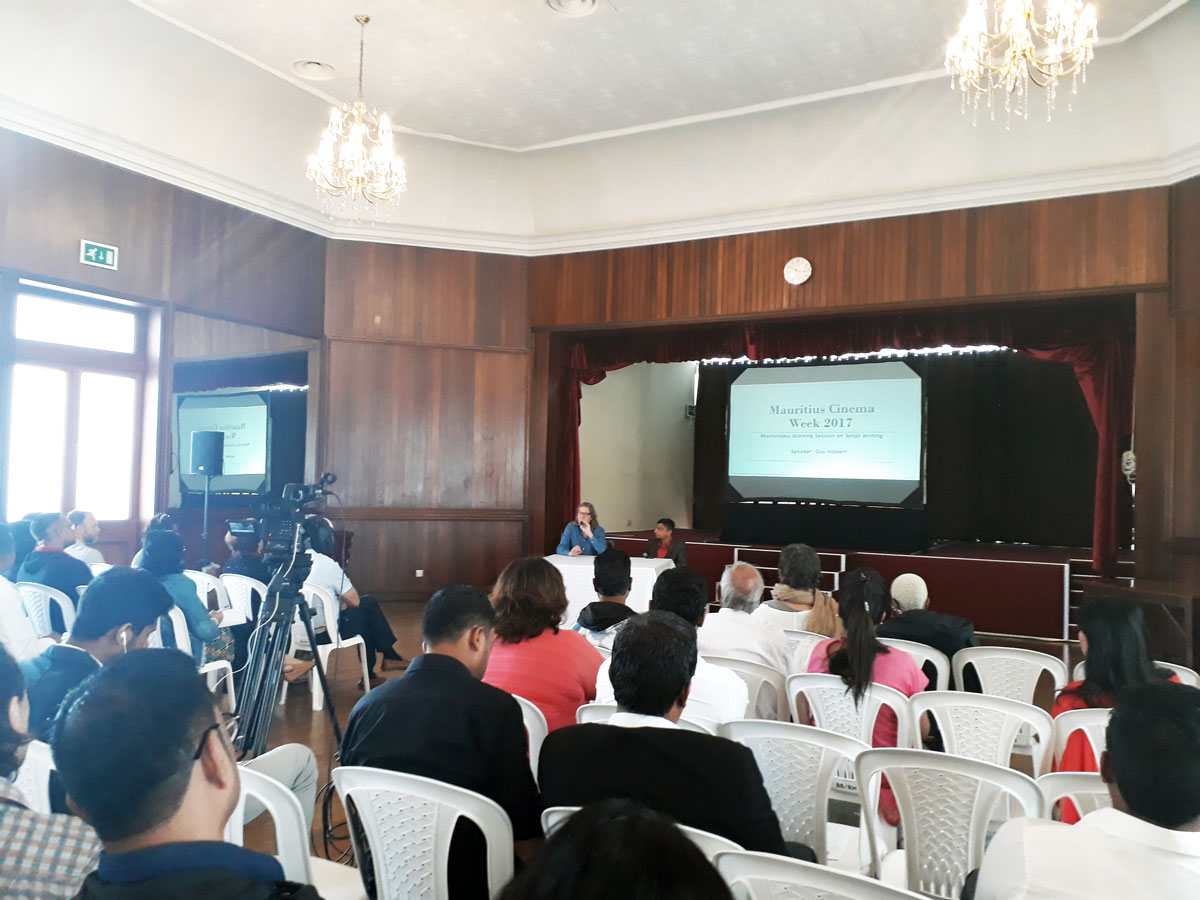
After the Official Launch of the Mauritius Cinema Week at Château de Labourdonnais, Mapou Mauritius, the First Day of the Masterclass started at around 10am at Plaza, Salle des Fetes, Rose Hill.
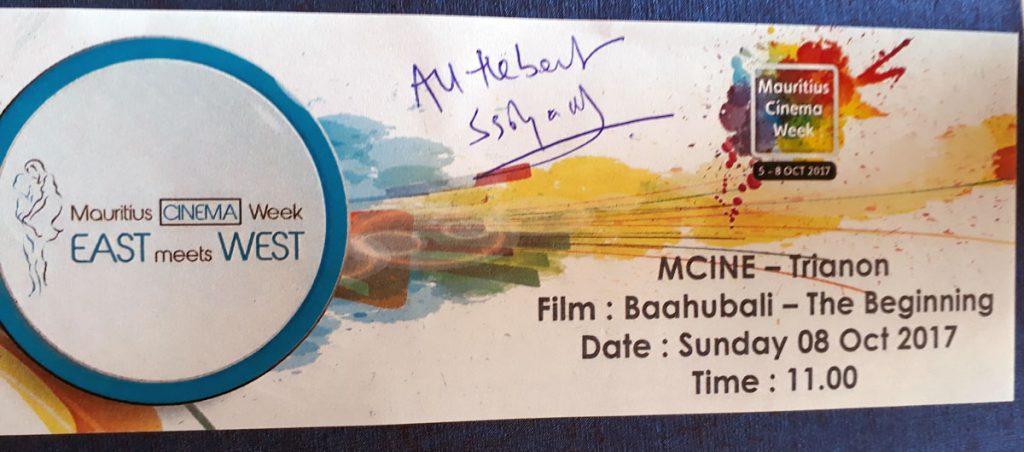
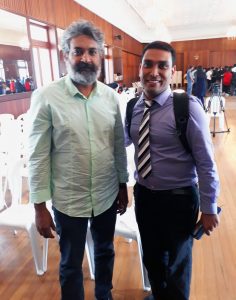
It was a great pleasure to see and meet the Director of Bahubaali, Mega Blockbuster Film, SS Rajamouli in Mauritius in the context of the Cinema Week. I gladly met him for an autograph, after expressing my ‘fan love’ for the movie, as well as the Android game which i play regularly on my smartphone.
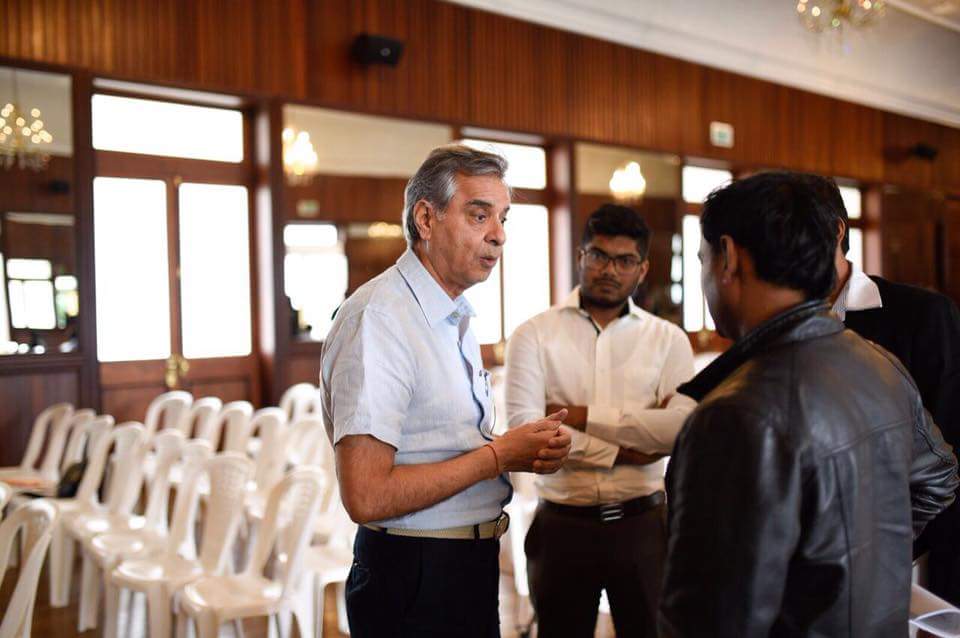
It was also a great pleasure to see Romesh Sharma, producer/director of Mauritian TV Serial – C’est la Vie. Had the opportunity to visit Cloud 9 Studio once during the Film Shooting in Mauritius of the TV Serial.
The first session of the Mauritius Cinema week was on:
Write Your Own Story – The Art and Craft of Script Writing

By Guy Hibbert
Moderator: Naman Ramachandran
About the Speaker
Award-winning British screenwriter Guy Hibbert debuted with an episode of the television series Crown Court (1983). He has won four BAFTA TV awards for No Child of Mine (1997); Omagh (2004), for which he also won best screenplay at the San Sebastian International Film Festival; Five Minutesof Heaven (2009), for which he also won the screenwriting awards at the Sundance Film Festival andthe Lecce Festival of European Cinema; and Complicit (2013). For Eye in the Sky (2015), he won bestscreenplay at the Writers Guild of Great Britain awards and the Evening Standard British Film awards,and a Prix Europa. A United Kingdom (2016), written by Hibbert is playing as part of the Mauritius Cinema Week.
Here is an outline of what I could take note of during his delivery (Disclaimer: I am not responsible for any inaccuracy of information/live typing. If you can suggest corrections, kindly please do as comments. i would gladly revise the note-taking exercise)
StoryTelling
Why am I telling the story?
What can I contribute towards my Society through my Story?
Advertisers are Story Tellers. They are selling their product. For 3 minutes of Ad, its a kind of story. Advertisers would not spend so much money if they think it would not change something. Change the way you think. Change the culture.
Quantin Tarantino’s work – Guy finds it difficult to support his work. So much down crime in USA, how storytellers would tell a story and make it an entertainment.
Advertisers would tell, yes, we have a profound effect on Society. Content is important as to what I do, what I write.
In stories, comedians have an important role. Every type of writer has an important role in society. The response to 9/11 – was to write a comedy? Write a script about this event that occurred in society.
Moderator: Did you know you wanted to be a story teller?
I started as a technician for a Theatre. For 10 years, I worked on building sets. Then I started to write for theatre. I wrote 3-5 plays for theatre. I eventually moved into Television. I didn’t had enough job for 8 years. I had my breakthrough via a stage play.
Moderator: What is your process? Do you lock yourself in a room? Do you use pen and paper?
Pen and Paper.
Type Writer
Computers came along.
Word Processing.
Is this the right dialogue?
Successful writers wake up at 6am in morning. Lock myself in a room. I write till 1pm and then I go meet my friends, check email, check football score, what’s happening in the news. I do 4 hours of writing in a 12 hours day.
Moderator: What’s your research process?
I do a lot of fact-based films. For instance – 5 mins of heaven.
Moderator: What is the main difference between writing for Film and Writing for Television?
There is a difference. There is something much bigger in a Film. There is a process we need to get through for a movie. There is more something of an event in Cinema rather than TV. I’ve spent 20 years in writing for TV and I have not met anybody. You are just in Television, you are in a box. The directors are now kind of choosing to work on big TV projects part of which as the fund is very good , specially with Netflix. Maybe there is a financial reason. Film and directors. Perhaps there are films like George Clooney would like to make. In UK, its around $1m for 1 hour of Television. VHS was fighting to be the dominant partner for Netflix. We have Netflix and HBO. The more budget, the more attractive it gets for actors. Now we have the bigger name directors, the money goes to bigger name actors.
I think writing Film, does not refers to TV. If you all think of your favourite films, you all remember favourite moments. One way of setting out (topography), is think of moments. Think of the film in terms of a curve. Two actually out of 2 moments of your film. The audience will remember these moments. Its a Dramatic wave. You are constantly thinking about those great cinematic peaks. I don’t think you need to that on TV. What you are doing is finding a centre moment in half an hour, so that your mom can come and watch the next episode. The story needs to be big enough.
Moderator: What are the challenges of writing shorter films?
I produced and wrote a short film myself. I did a 10-min short film on Sky TV for Christmas. We wanted a 10min story/10min film, in which there was no dialogue. It was a challenge for a very small budget.
The director has to respect script. And the writer has to let go the script. It is very important for that process to work well. Any producer has to respect that process. Else you will have a nightmare in the end as somewhere in the process, we’ve gone wrong.
A lot of films are adapted from Novels. I don’t do that because I don’t tend to think on novels. The producer will know the book, will know what he wants from the book Invariably, I don’t respect the book. The whole thing ends up with the producer being disappointed. I don’t do that. With Susan Hills (Ruth and Karma). I read the book, and I worked with Susan fro about 2 years. She gave me lots of advice. We worked very closely together. She was writing a history book and I was writing a Script.
Question from the Audience on: Script Writing as a Successful Career
I spend few years at a screen writing centre. If we can develop screen plays in Africa, then we have the basis of Cinema industry. I tried setup screenplay centres in Cape Town, Kenya. The problem is that politicians wants to get money back from it. The potential for film industry is Huge. And Nobody is not doing anything about it. And it has to start with screenplay. You get a novelist, journalist. You get them together with producers. If you get an idea for movie together. We bring story tellers together. This is what we need in Africa. It is a billion dollar industry and nobody is doing anything about it. It really needs to happen in Africa. So many stories being told, but nobody is putting up a base and get this thing going.
In the beginning of the film, do I like this character, is it going work? Where is the right time, where the story kicks in. It’s almost impossible to know when when the story kicks in. Nobody really knows. Act 1 – Clear.
Act 2 – all the much complications. Were the ending comes.
There are always disagreements with the director about the script. The filming process is you get a beautiful glass (creating by the writer) breaking that glass. And then the filming process is about coming back together of the different bits. If an actor says I do not understand this line, I would break down. The director would come and come with the vision of the film. You need a very good strong producer. The producer works with the director and script writer. A sense of trust with everyone needs to be established. Then you get all types of problems, for eg. You get bad cast, as you did n’t have enough money to get that person. Film can get run off for years and years. Small budget film.
One should always surprise the audience with the lines/ I can never know whether what I am writing is rubbish for now or excellent work. For 6 months, I have written totally rubbish. The right story, the right combination of actors. A lot of top scripts are written by writers. Right acts, right moods, right actors, then we get a perfect film.
The Second session took place after a tea break.
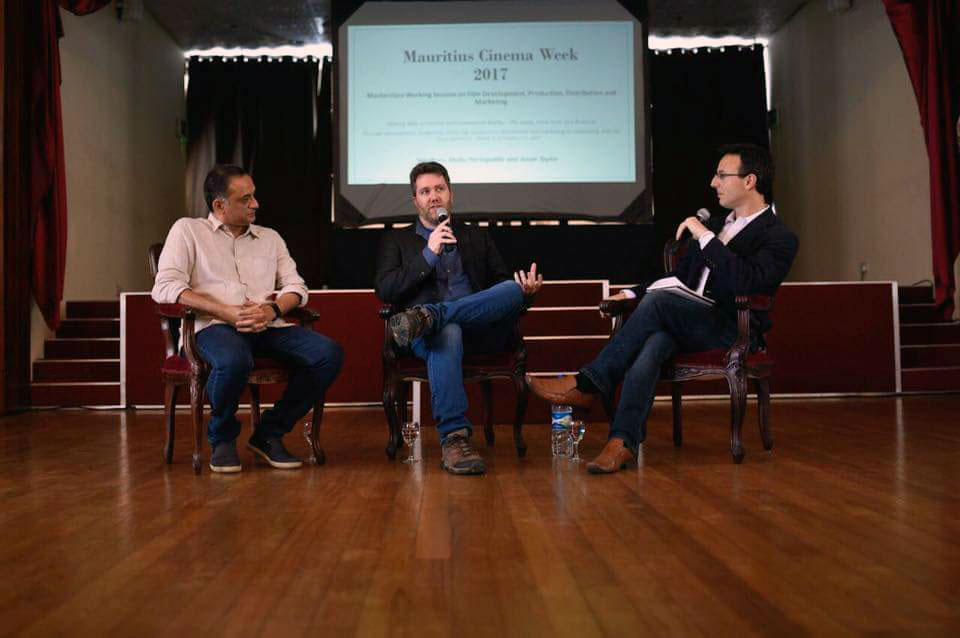
Making Ideas a Creative and Commercial Reality – The many, many tasks of a Producer
Through development, budgeting, financing, production, distribution and marketing to connecting with the final audience – What is a Producer’s role?
Speakers (Producers): Shobu Yarlagadda and Jason Taylor
Moderator: Julian Alcantra
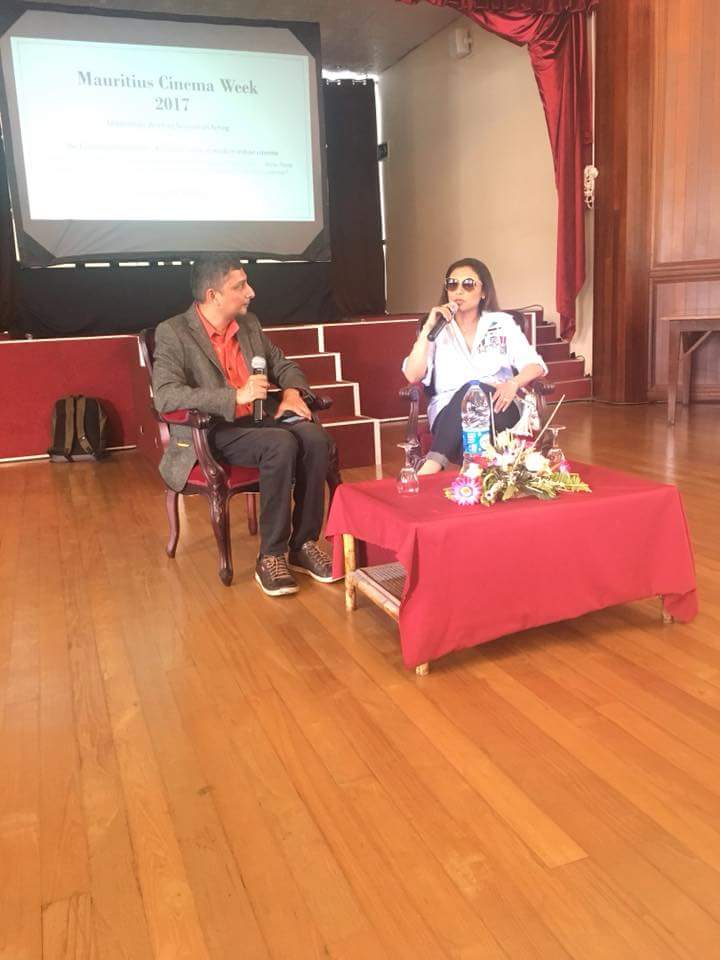
Finally the last session of Day 1 of the masterclass was on:
The Evolution of the Role – Actresses’ roles in modern Indian cinema
From crowd-pleasing blockbusters to more challenging critical roles – How have opportunities and the roles for Actresses changed in modern Indian cinema?
Speaker: Rani Mukerji