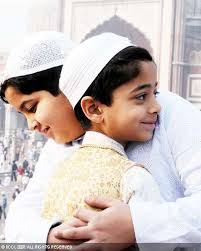
Mauritian culture is based on the diversity of the population, that’s why there is no “official religion” in Mauritius. Hindus, Tamils, Muslims, Christians, Buddhists and others from all over the globe live in harmony and respect the free practice of all religions in Mauritius.
In Mauritius every community have got their respective holiday whether Hindu, Tamils, Muslims, Christians and Chinese. Here are some examples how Mauritians celebrate festivals.
Maha Shivaratree
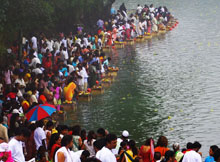
The Maha Shivaratree is celebrated each year and is in honour of the Lord Shiva. The festival lasts for three days and is celebrated by Hindus from all over the Island who participate in a pilgrimage the Grand Bassin.
Grand Bassin is a special religious lake for the Hindu people in Mauritius and the water within the lake is supposed to communicate with the water of the holy Ganges River in India. At Grand Bassin the Hindu people offer fruits, sweets and flowers to the Shiv Lingam and collect the holy water for the great night of Shiva. The festival happens between February and March.
Cavadi
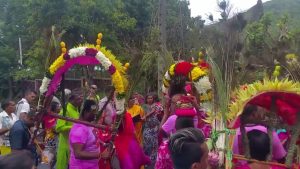
Thaipusam celebrates the victory of good over evil. It is believed that Goddess Parvati gave the ‘Vel’ (lance) to Lord Murugan on the Thaipusam day to destroy the demon army. Thaipusam is observed during the Pusam star in the Tamil month of ‘Thai.’ Thaipusam is mainly celebrated across South India including Kerala, Andhra Pradesh, and Karnataka. The word Thaipusam is a comprised of the Thai, name of the Tamil month and Pusam, the name of the star. This Pusam star is at its highest point during the festival.
This festival is celebrated in January/February. Bodies are pierced with needles, tongues and cheeks with pins, devotees in a trance carry the ‘Cavadi’ on their shoulders as penitence. The ‘Cavadi’ is a wooden arch, covered with flowers and with a pot of milk at each end.
Spring Festival
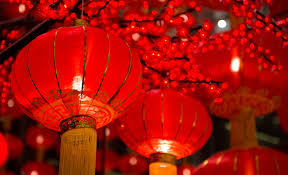
The Chinese New Year is celebrated each year on a different date, owing to the differences between the lunar and the solar calendars. Houses are thoroughly cleaned before the festival. No knife or scissors are used on the actual day of the festival. Red, a symbol of happiness is the main colour of the day. Food offerings are made to ensure that the following year will be plentiful and traditional ‘Wax’ cakes are distributed to parents and friends. Firecrackers are set off to drive away the evil spirits.
Assumption of Mary
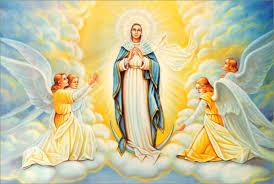
Celebrated every year on August 15, the Feast of the Assumption of the Blessed Virgin Mary commemorates the death of Mary and her bodily assumption into Heaven, before her body could begin to decay–a foretaste of our own bodily resurrection at the end of time. Because it signifies the Blessed Virgin’s passing into eternal life.
Eid ul Fitr
Eid ul fitr is an important religious holiday celebrated by Muslims worldwide that marks the end of Ramadan, the Islamic holy month of fasting. The religious Eid is the first and only day in the month of Shawwal during which Muslims are not permitted to fast. The holiday celebrates the conclusion of the 29 or 30 days of dawn-to-sunset fasting during the entire month of Ramadan.
It is a day of joy where family members have lunch together. The elders prepares delicious briyani and halwa for their beloved ones. Also, halwa is shared among neighbours, friends and colleagues.